
The holidays turn every kitchen into a high traffic zone, pans coming out of the oven, pots moving off the stove, guests helping themselves at the counter. With all that heat moving around, it is natural to pause and wonder: Can you put hot pans on natural stone countertops? It is one of the most common questions homeowners ask when preparing their stone for the holidays, and for good reason.
While natural stone is impressively heat resistant, it is not heat proof. A single hot pan might not leave a mark, but repeated exposure can lead to dull spots, weakened sealers, discoloration, or even small cracks over time. So before the big cooking rush begins, it is worth knowing the simple rule that protects every stone surface, always use a trivet or hot pad.
If you want your countertops to stay beautiful long after the season ends, understanding how heat interacts with natural stone will help you protect the investment you rely on most during holiday cooking.
.jpg)
Protecting your natural stone countertops during holiday cooking
So… Can You Put Hot Pans on Natural Stone?
Short Answer
Technically, yes, you can place a hot pan on natural stone, and it will usually survive the moment. But the real issue is not whether it can handle heat once, it is what repeated use of hot pans on stone does over time. Sudden temperature changes can stress the surface, weaken sealers, create dull spots, or cause micro cracks that worsen with age.
That is why fabricators and care specialists agree on the same golden rule, Always use a trivet or hot pad. It is the simplest, safest way to avoid long term damage and keep your stone looking its best, especially during the holidays when your counters are working overtime.
How Natural Stone Handles Heat (And Why "Heat Resistant" ≠ "Heat Proof")
Natural stone forms deep within the earth under extreme heat and pressure, which is why many homeowners believe it can take anything a hot pan can dish out. And while natural stone countertops are naturally heat resistant, real kitchen environments introduce variables that the stone simply was not designed for, like rapid temperature swings, man made sealers, and surface finishes that react differently to heat than the stone itself.
Most stones, especially dense granites and quartzites, will not scorch, melt, or burn. In fact, their actual heat tolerance far exceeds what any oven or stovetop can produce. But that does not mean they are immune to cosmetic or structural damage.
Cracks, dull spots, discoloration, and finish degradation appear long before the stone reaches any temperature that would cause structural failure. The issue is not the stone surviving heat, it is whether it can maintain its beauty and integrity after years of repeated exposure.
| Stone Type | Heat Resistance | Main Risk |
|---|---|---|
| Granite | High | Thermal shock |
| Quartzite | High | Natural fissures + shock |
| Marble | Medium | Heat + surface sensitivity |
| Limestone | Low | Heat + moisture |
| Travertine | Low | Filled voids reacting |
| Soapstone | High | Finish reaction only |
| Slate | Medium to High | Layer separation |
| Onyx | Low | Resin backing |
| Quartz (Engineered) | Low | Resin scorching |
Stone Type Heat Resistance Main Risk
Granite and Hot Pans, The Most Misunderstood Combo
"Yes, But You Should Not" Explained
Granite is often celebrated as the most heat tolerant countertop material, and in many ways that is true. Its igneous composition gives it naturally strong resistance to high temperatures, which is why you may hear that granite can handle a hot pan. But experts caution that this should not become a habit, especially not during the holidays when cookware goes from scorching hot to countertop in seconds.
Thermal shock is the biggest risk. When a blazing pan meets a cooler granite surface, the sudden temperature change can stress the stone, creating cracks along existing veins or micro fissures. Even if the stone itself does not crack, the sealer and resins used to treat and finish granite are far more vulnerable. These can dull, discolor, or permanently change texture from repeated heat exposure.
Industry resources from Maranatha Stone, Colonial Marble and Granite, and others consistently give the same advice, Granite may survive direct heat, but your finish will not. Always use a trivet.
.jpg)
Close up of granite countertop with hot pads
How Other Natural Stones React to Hot Pans
Not all natural stones behave like granite. Their mineral composition, porosity, and structural characteristics influence how they respond to heat and how much risk you take by placing hot pans directly on them.
Marble
Marble is beautiful but softer and more delicate. While it will not burn, it can crack along veins or micro fissures when exposed to sudden heat.
Quartzite
Quartzite is extremely hard and often very heat resistant, but like granite, it still faces risks from thermal shock and resin or sealer degradation. Experts still advise trivets.
Soapstone
Soapstone is one of the most heat tolerant stones available and is even used for fireplaces and wood stoves. Still, concentrated heat can cause cosmetic changes or stress over time, so trivets remain the smarter choice.
Slate And Others
Dense stones like slate may tolerate heat but often contain natural clefting or planes of weakness. A hot pan hitting one of those weak points can cause a crack or chip.
Across all categories, fabricators agree: Durability varies, but the recommendation stays the same, protect your stone to protect your investment.
| Stone Type | Heat Tolerance | Main Heat Risk |
|---|---|---|
| Marble | Medium | Surface sensitivity + thermal shock |
| Granite | High | Sudden temperature change |
| Quartzite | High | Natural fissures |
| Soapstone | Very High | Finish changes only |
Stone Type Heat Tolerance and Main Heat Risk
What Actually Damages Natural Stone When You Place Hot Pans on It
Even though natural stone countertops are formed under extreme heat, the conditions in your kitchen are very different from the geological environments where these stones originate. The damage from hot pans is not about the stone burning, it is about how suddenly applied, concentrated heat interacts with the stone's surface, sealers, and micro structures.
Thermal Shock
When a very hot pan hits a cooler stone surface, the top layer of the stone expands quickly while the layers beneath remain cooler. This rapid, uneven expansion can create stress that leads to cracks, chips, or fractures, especially along natural veins or micro fissures.
Finish and Sealer Degradation
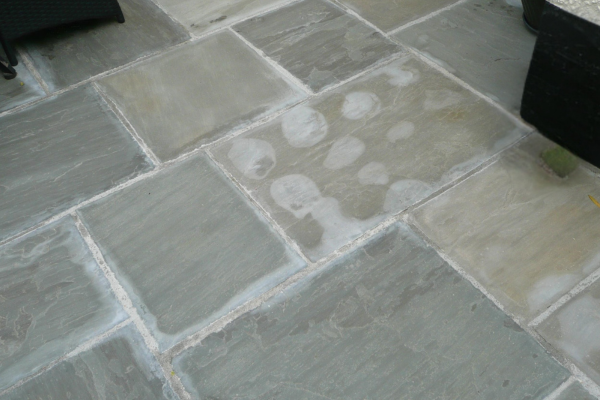
Stone itself might endure the heat, but sealers, resins, and adhesives rarely do. High temperatures can dull the finish, cause discoloration, or even alter the stone's texture. This type of damage is permanent without professional restoration.
Oil Plus Heat Equals Stubborn Stains
Hidden Safety Hazard
Even if the stone looks unaffected, it can hold onto heat long after the pan is removed, creating a burn risk for anyone who touches that area later.
Holiday Specific Stone Care Tips (To Prevent Heat Damage)
The holidays bring more cooking, more dishes, and more hands in the kitchen, making it the easiest time of year for accidental damage. Preparing your stone ahead of the holiday rush ensures your surfaces stay protected through heavy use.
Use Trivets and Hot Pads Everywhere
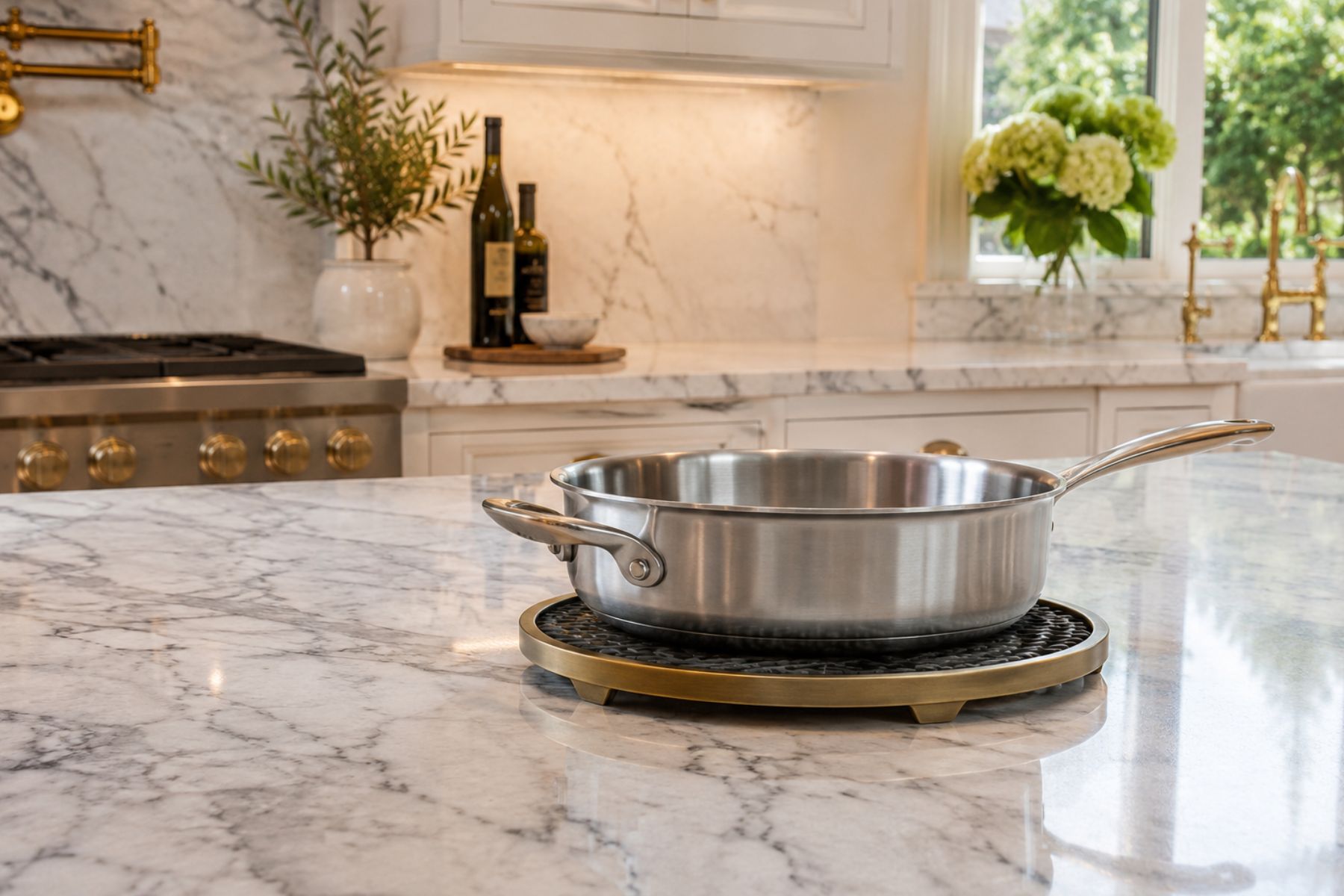
Place them on countertops, islands, and serving stations so guests never have to guess where they can safely set a dish.
Protect Surfaces from Slow Cookers and Warming Trays
Appliances that produce steady heat for several hours can cause localized damage. Set them on insulated mats or wooden boards instead.
Keep the Undersides of Pans Clean
Grease and oils combined with heat can stain or cook into the stone's finish. A quick wipe before setting cookware down can prevent long term discoloration.
Know Your Stone and Sealer
If you are unsure what type of stone you have, or what sealer was used, ask your fabricator. Care instructions differ between marble, granite, quartzite, and other materials.

Preparing your stone surfaces for holiday cooking
Frequently Asked Questions
Does granite crack from hot pans?
Yes, while granite is heat resistant, sudden temperature changes can cause thermal shock, leading to cracks along natural weak points.
Can a trivet really make a difference?
Absolutely. Trivets protect against both direct heat and heat plus oil stains, making them essential for long term stone care.
Are there heat resistant sealers that solve this problem?
Most sealers are not designed to withstand direct, sustained high heat. They can dull or discolor even if the stone beneath is unharmed.
Is soapstone the only stone safe for hot cookware?
Soapstone handles heat well, but it is not invincible. Concentrated, repeated heat can still cause stress or cosmetic changes.
How can I prepare my stone before holiday cooking?
Clean your surfaces, check for existing cracks or dull spots, and set out plenty of trivets before guests arrive to prevent heat related damage.
Conclusion
When the holidays arrive, your kitchen becomes the heart of the home, filled with heat, movement, and constant activity. And while natural stone countertops are impressively durable, they are not immune to the long term effects of hot pans, sudden temperature changes, or weakened sealers. The truth is simple, you can put a hot pan on natural stone once and it might be fine, but repeated exposure will almost always leave a mark over time.
Whether you are cooking for two or hosting a house full of guests, the best protection for your stone is also the easiest, use a trivet or hot pad every time. It keeps your counters looking beautiful, prevents cracks and dull spots, and preserves the finish you invested in.
If you want to make sure your stone is fully prepared for the holidays, clean, protected, and ready for heavy use, Cornerstone Restorations is here to help with expert care and maintenance.


%20(600%20x%20300%20px).png)

.svg)

.svg)