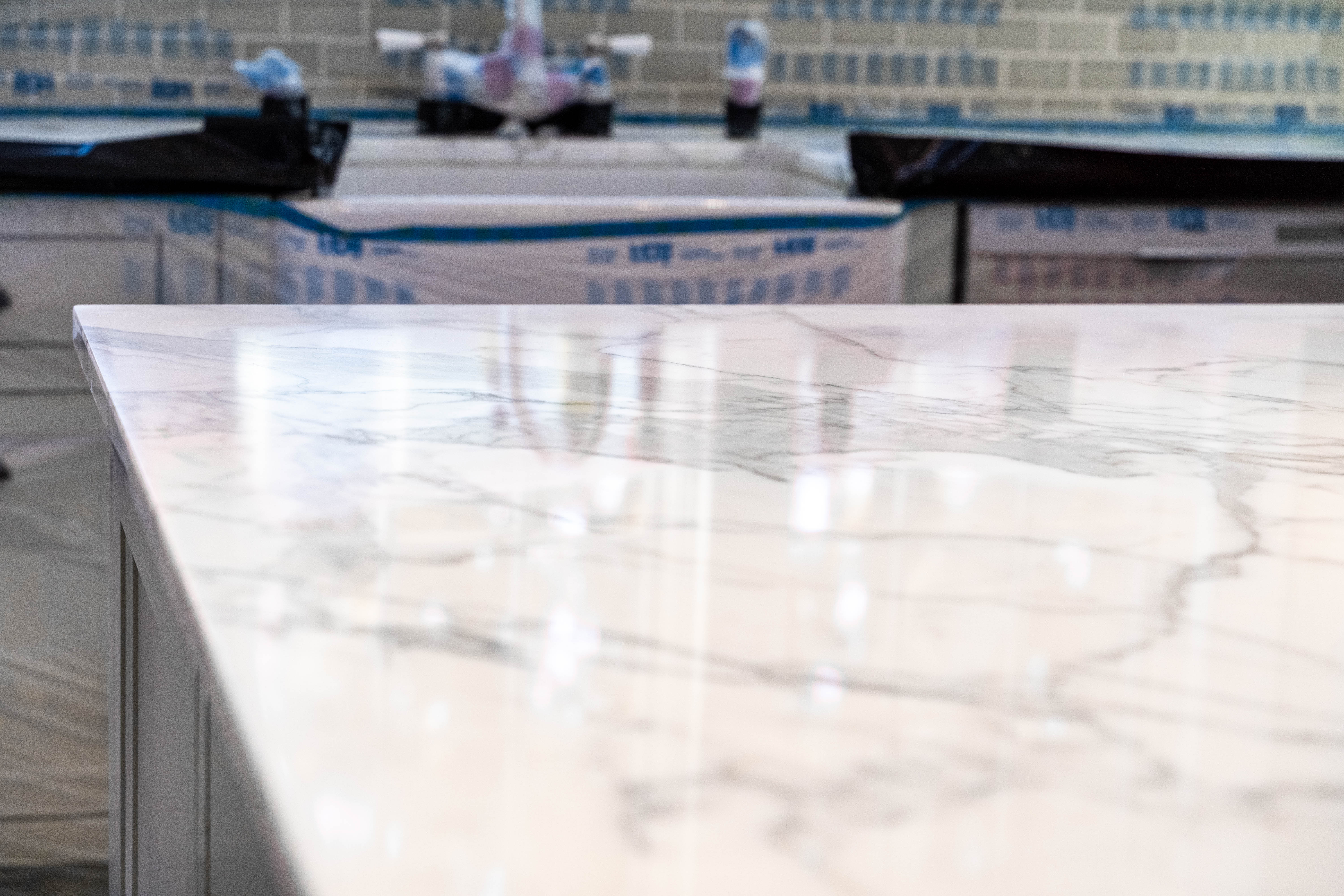
By the time February arrives, most homes have been through a heavy season of cooking, guests, spills, winter boots, and constant indoor traffic. This is usually the moment when homeowners start to notice the subtle signs on their stone surfaces. A dark spot that hangs around longer than it used to. A ring near the sink. A shadow in the entryway. A dull patch on the kitchen island that no cleaning product seems to fix.
This is when one question comes up more than any other. Do I need to seal my stone, and what does sealing actually do?
There is a major misconception around sealing. Many homeowners believe sealing is full protection. The reality is that sealing protects stone from one specific issue, absorption. It helps prevent stains, slows moisture, and keeps oils and contaminants from soaking into the surface. It does not stop etching. It does not stop scratching. It does not make stone indestructible.
Understanding what sealing does, and does not do, helps homeowners make smarter decisions after a high-use winter season. February is the perfect time to reassess.
What Sealing Actually Does
Most residential stone sealing involves impregnator sealers, which penetrate below the surface to slow absorption. These sealers do not change the look or finish of the stone. Instead, they reduce how quickly water, oils, and contaminants can soak into the pores.
There are also topical sealers, coatings, and film-based systems, which fall into different categories of surface protection. These systems sit on top of the stone and involve different durability levels, preparation requirements, and application processes. They are not part of standard sealing and should be evaluated separately based on use, environment, and goals.
Here are the benefits homeowners notice most.
- Better resistance to staining from coffee, wine, oil, sauces, or cosmetics
- Less moisture held inside the stone, which is crucial for bathrooms, showers, and winter-worn entryways
- Reduced risk of mold or mildew in wet areas
- Protection from winter salt and dirty meltwater, especially on exterior steps or mudrooms
- Easier cleaning, because dirt stays at the surface instead of bonding into the stone
The most accurate way to describe sealing is that it buys you time. It slows absorption long enough for spills to be wiped before they leave permanent marks.
| What Sealing Protects Against | What Sealing Does Not Protect Against |
|---|---|
| Staining from oils, coffee, wine, sauces, cosmetics | Etching caused by acids on calcium-based stone |
| Moisture absorption and slow water infiltration | Scratching from grit, metal, chairs, and dragged appliances |
| Winter salt and dirty meltwater soaking into porous stone | Existing damage like dull spots, etch marks, or stains |
| Dirt bonding into pores and becoming harder to clean | Structural cracks or chips caused by impact or settling |
Sealing helps with absorption-based problems, not chemical reactions or physical wear.
What Sealing Does Not Do: Common Misconceptions
This is where sealing gets misunderstood. Many people think sealing is a shield that prevents all damage. Sealing has very specific limits.
Here are the most important clarifications.
- Sealing does not prevent etching, which is a chemical reaction between acids and calcium-based stone like marble, limestone, and travertine.
- Sealing does not stop scratches caused by grit, metal, chairs, or dragged appliances.
- Sealing does not repair existing damage such as stains, dull spots, or etch marks.
- Over-sealing can create sticky or blotchy surfaces when applied too often without proper stripping.
You can think of sealing like rain gear, not body armor. It keeps most of the mess from soaking in, but it does not change what the stone is made of.
How to Perform an Absorption Test
The real way to know when sealing is needed
The best way to determine whether your stone needs sealing is not guesswork. It is a simple absorption test that takes only a few minutes.
Here is the process.
- Clean a small area and let it dry completely.
- Place a spoonful of clean water on the surface. You can also test with a drop of oil.
- Watch for darkening of the stone over the next 5, 10, and 30 minutes.
What the results mean.
- Darkening within minutes: High absorption. Resealing is recommended.
- Darkening within 10 to 15 minutes: Moderate absorption. Sealing is beneficial in kitchens and baths.
- Little or no darkening after 20 to 30 minutes: Dense stone. Sealing may not be needed often.
Professionals perform the same test during maintenance visits to determine whether existing sealer is still functioning.
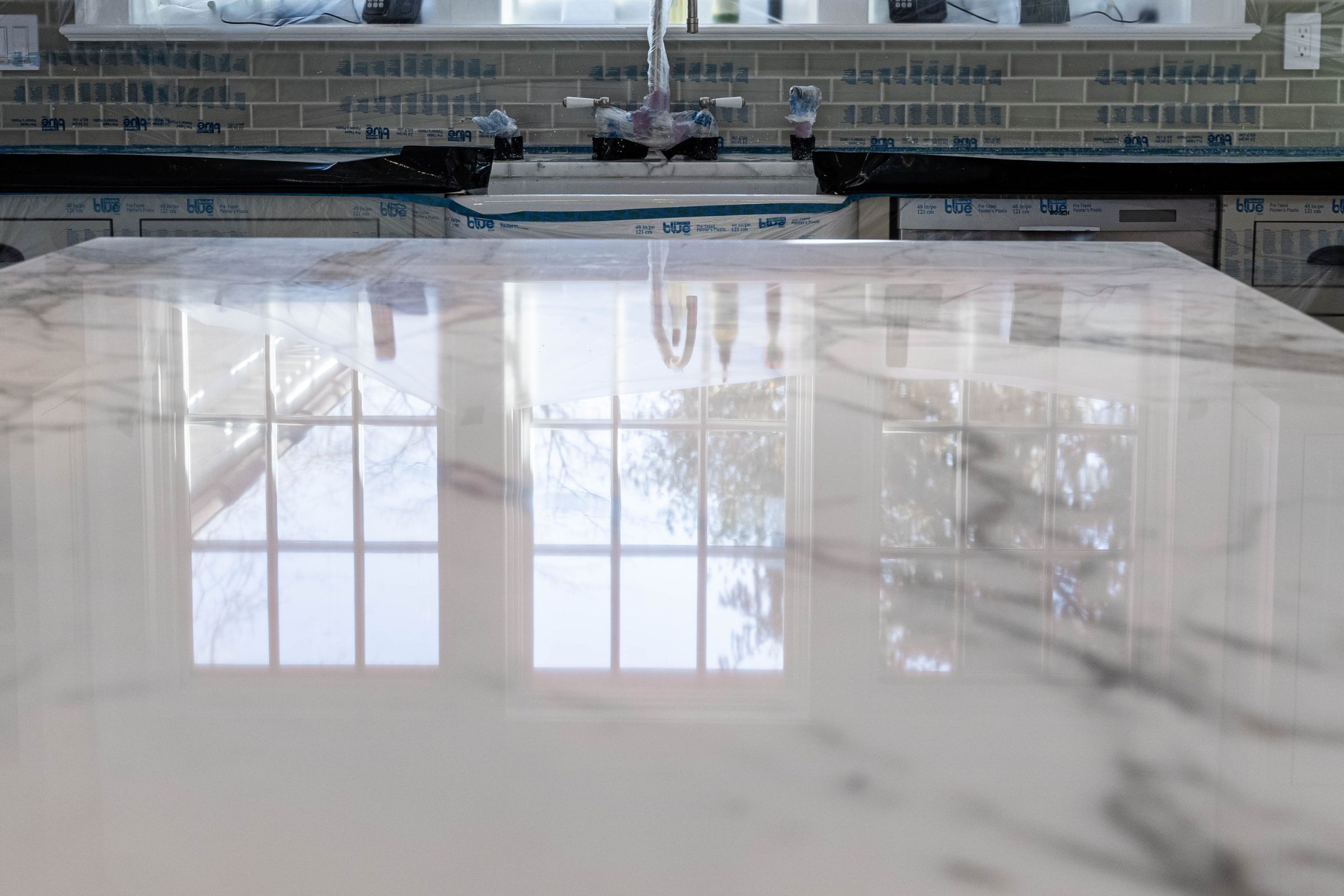
A clear, even finish is a good sign your surface is still protected.
| Absorption Test Result | What It Means | Recommended Action |
|---|---|---|
| Darkens within 1–5 minutes | High absorption, sealer likely worn or missing | Reseal soon, especially in kitchens, baths, and entryways |
| Darkens within 10–15 minutes | Moderate absorption | Sealing is beneficial in high-use or wet zones |
| Little/no darkening after 20–30 minutes | Dense stone or sealer still performing | Monitor and retest annually |
Test annually and reseal based on performance, not a fixed calendar.
Which Surfaces Need Sealing and How Often
Not all stone surfaces need sealing equally. Some stones are naturally more porous. Others are simply exposed to more spills, moisture, or winter contaminants.
Stones most likely to need regular sealing
- Marble, limestone, travertine
- Light-colored or porous granites
- Sandstone, slate, textured stones
- Shower floors, vanities, wet rooms
- Kitchens, busy islands, and prep zones
- Exterior stone exposed to winter meltwater and salt
How Often Should You Seal
There is no universal schedule. The most accurate method is to test annually and reseal based on performance.
General guidance.
- Kitchens and baths: Test once a year, reseal as needed.
- Commercial and multifamily spaces: Annual or biannual sealing based on traffic.
- Exterior stone: Consider seasonal sealing, especially after winter.
Winter, Salt, and Etching: What Homeowners Need to Know in February
February is when the impact of winter becomes the most visible.
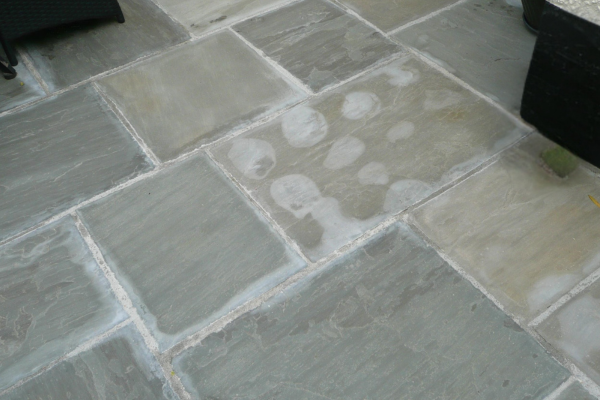
- Winter salt and dirty meltwater can penetrate exterior and entryway stone, leading to flaking or efflorescence.
- Indoor flooring collects grit and sand, which abrades the surface and embeds into the pores if the stone is unsealed.
- Sealed marble can still etch, because etching is chemical, not absorption-based.
- Sealing supports winter maintenance, but it cannot stop every form of seasonal damage.
Guidance for Homeowners and Property Managers
For homeowners
- Perform the water test in February or March
- Prioritize sealing for kitchens, baths, showers, and stone near exterior doors
- Use pH-neutral cleaners to preserve the sealer
- Understand the difference between stains and etches
For property managers and HOAs
- Treat sealing as recurring maintenance, not one-time treatment
- Standardize stone-safe cleaning products across staff
- Use structured seasonal maintenance schedules
- Partner with experts who track stone conditions and long-term performance
A quick seasonal check can prevent absorption-based damage from turning into restoration later.
Conclusion
After months of heavy use and winter weather, February is the ideal moment to evaluate your stone surfaces. Sealing is not about overdoing maintenance. It is about applying the right protection in the right places, based on actual absorption and real-world conditions.
If you want clarity on where sealing is needed, which surfaces require testing, or how long your current sealer will last, Cornerstone can help. We perform professional absorption tests, evaluate the condition of your stone, and recommend a targeted sealing strategy that protects your investment without guesswork.
Schedule your Winter Stone Sealing Review today and protect your stone where it matters most.


%20(600%20x%20300%20px).png)

.svg)

.svg)