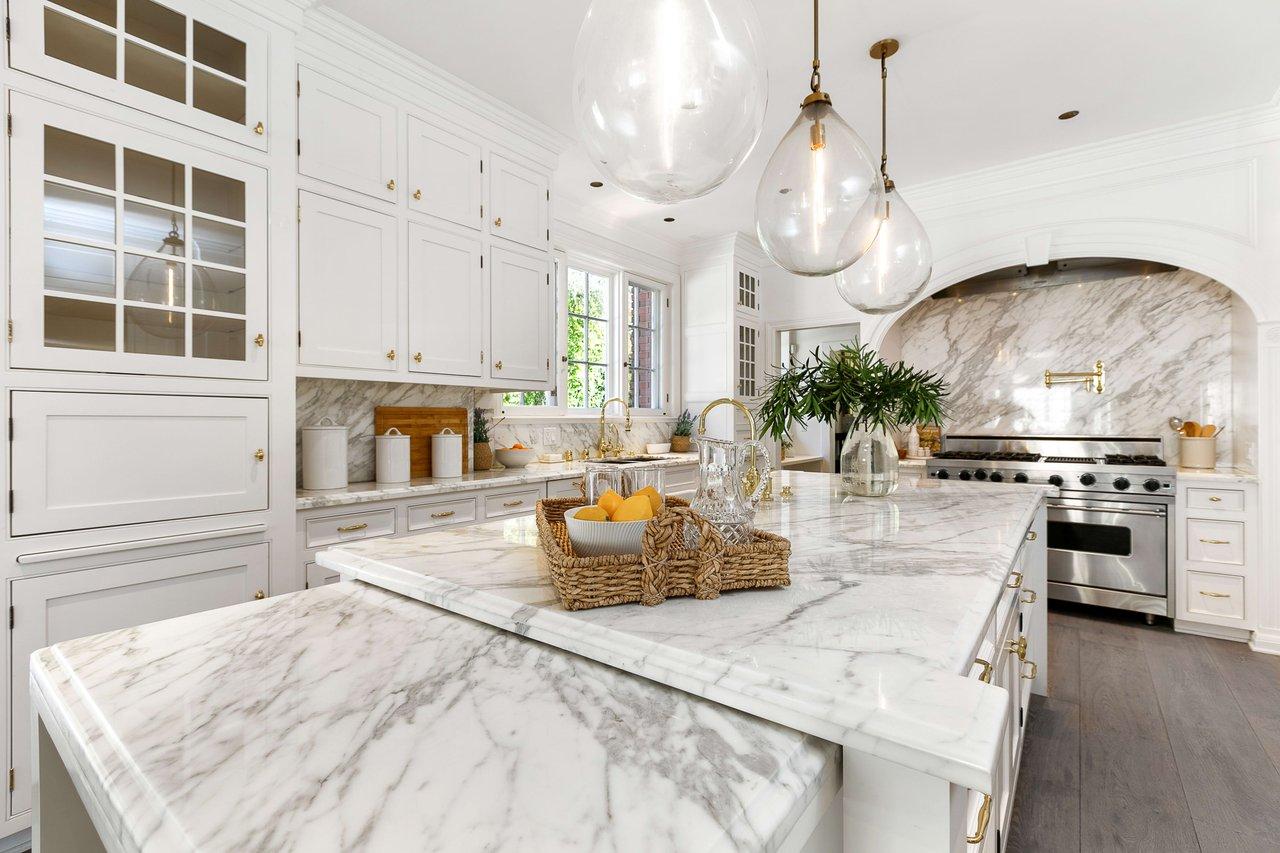
Marble is often chosen for luxury kitchens, bathrooms, fireplaces, and custom architectural details because of its timeless beauty and lasting character. Although natural stone is remarkably durable, many homeowners still wonder whether everyday heat from cookware, appliances, fireplaces, or direct sunlight can damage marble surfaces.
The answer is more nuanced than a simple yes or no. Marble can tolerate moderate heat, but sudden temperature changes, prolonged exposure, and repeated contact with hot objects may affect the stone's finish, protective sealer, or underlying installation.
Whether your home features Calacatta marble countertops, custom limestone surrounds, quartzite surfaces, or an outdoor natural stone kitchen, understanding how heat interacts with these materials can help prevent avoidable damage and preserve their appearance for years to come.
Is Marble Heat Resistant?
Marble is naturally formed through intense heat and pressure beneath the earth's surface. Because of this, the stone itself can withstand temperatures far beyond those normally found in a residential kitchen or bathroom.
However, a finished marble surface is more than a raw slab of stone. Most installations include sealers, adhesives, resins, fillers, polishing compounds, and supporting materials that may react differently to heat.
This means marble may be considered heat resistant, but it should not be treated as completely heatproof.
- The marble itself may tolerate heat better than the sealer protecting it.
- Sudden temperature changes may place stress on the stone or installation.
- Repeated heat exposure can gradually affect the polished finish.
- Resin-filled areas, repaired cracks, and stone seams may react differently than solid marble.
- Heat can make existing imperfections more noticeable over time.
For luxury homeowners, the safest approach is to protect marble from direct contact with extremely hot objects, even when visible damage does not occur immediately.
Can You Put Hot Pans Directly on Marble?
Placing a warm plate or moderately heated dish on marble is unlikely to cause immediate damage. A pan removed directly from an oven, cooktop, or broiler presents a different level of risk.
Extremely hot cookware can transfer concentrated heat into a small area of the stone. While cracking from a single hot pan is uncommon, direct exposure may affect the sealer, create discoloration, damage resin repairs, or contribute to thermal stress.
The condition of the marble also matters. A thick, properly installed slab may respond differently than a thinner tile, repaired section, unsupported edge, or stone surface with existing hairline cracks.
Using a trivet, heat-resistant pad, or protective board is the simplest way to reduce unnecessary risk. It provides inexpensive protection for a surface that may represent a substantial investment.
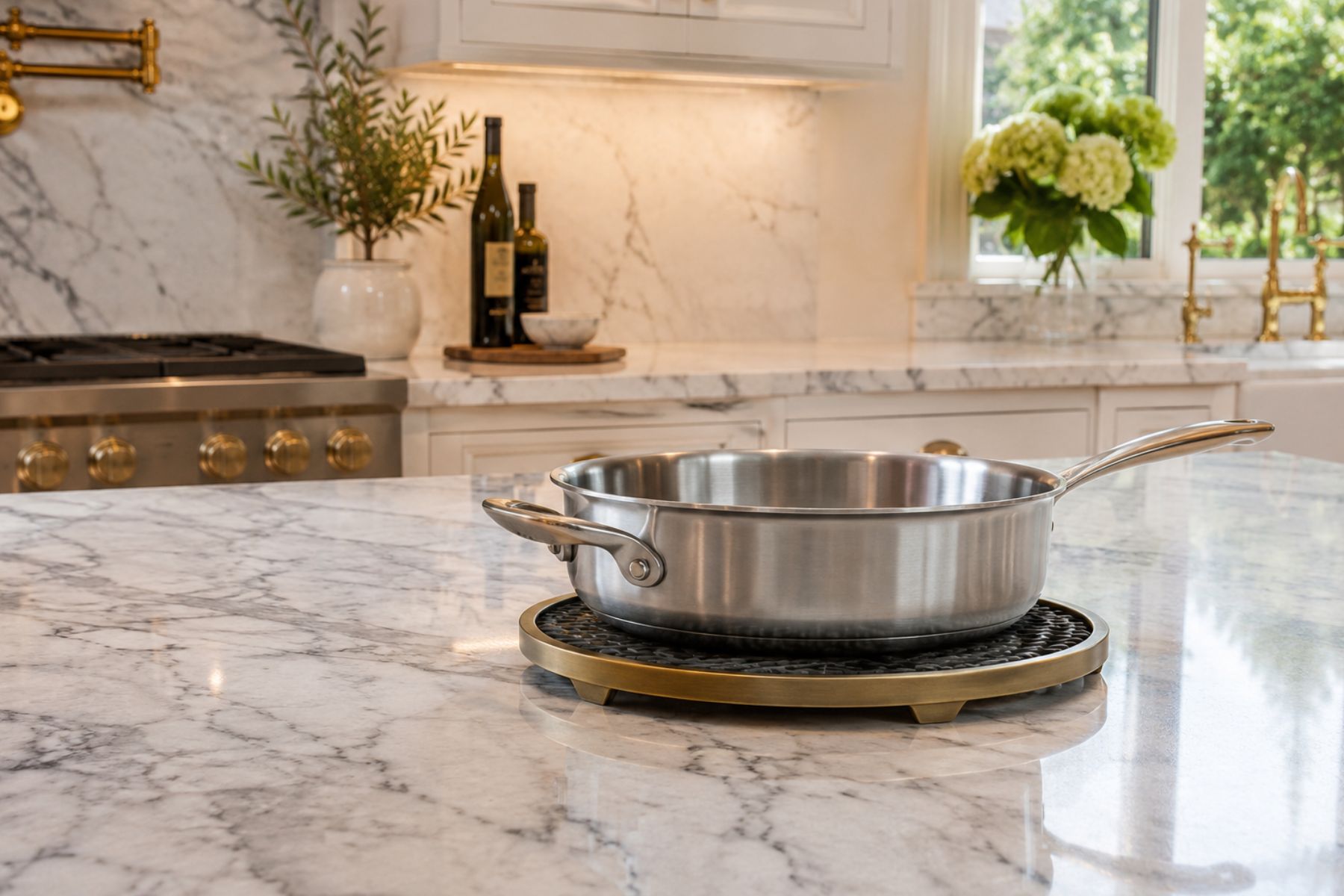
Using a trivet beneath hot cookware helps protect marble countertops, sealers, and polished finishes from concentrated heat exposure.
What Happens When Marble Gets Too Hot?
Heat-related issues do not always appear as a dramatic crack or burn mark. In many cases, the first signs are subtle changes in the appearance or performance of the surface.
Sealer Breakdown
Marble sealers are designed to reduce the rate at which liquids and staining agents absorb into the stone. They are not designed to act as permanent heat barriers.
Repeated exposure to very hot cookware or appliances may weaken certain sealers over time. Once the protective treatment begins to deteriorate, the marble may become more vulnerable to oil, wine, coffee, food coloring, and other household substances.
Discoloration
Direct heat may cause some sealers, resins, adhesives, or repaired areas to yellow or darken. This can be especially noticeable on white and light-colored marble.
What appears to be a burn in the stone may actually be a reaction within a topical treatment, resin-filled area, or substance that was already present on the surface.
Thermal Shock
Thermal shock occurs when a material experiences a rapid temperature change. For example, placing an extremely hot pan on a cold marble countertop may cause one small section to expand faster than the surrounding stone.
Severe cracking from ordinary residential use is not common, but the risk can increase around existing fissures, unsupported sections, seams, thin tiles, and previously repaired areas.
Changes to the Finish
A polished marble surface may begin to appear hazy, uneven, or dull after repeated exposure to heat. This does not always mean the stone itself has been permanently damaged.
In some cases, the affected layer is limited to the sealer, residue, or polished finish and can be corrected through professional restoration.
Common Household Heat Sources That Can Affect Natural Stone
Hot pans are only one potential source of heat. Several everyday appliances and household items can expose marble countertops, vanities, and architectural surfaces to elevated temperatures.
- Slow cookers and pressure cookers that remain warm for several hours
- Air fryers that release concentrated heat beneath or behind the appliance
- Toaster ovens placed directly on natural stone countertops
- Electric kettles and coffee makers with heated bases
- Hot baking sheets, roasting pans, and casserole dishes
- Curling irons and hair straighteners placed on marble bathroom vanities
- Portable warming trays used during parties or catered events
- Candles, incense holders, and decorative tabletop fire features
Small appliances can be especially easy to overlook because they may remain in the same location every day. Over time, prolonged heat beneath an appliance may weaken the sealer or create uneven discoloration.
Protective mats should be heat resistant, breathable, and appropriate for natural stone. Rubber-backed mats or moisture-trapping materials may create a different set of problems if condensation or residue becomes trapped beneath them.
Can Heat Cause Marble to Crack?
Marble does not usually crack simply because a warm object touches the surface. When heat-related cracking occurs, it is often connected to additional vulnerabilities within the stone or installation.
Potential contributing factors include:
- Existing hairline cracks or natural fissures
- Unsupported countertop overhangs
- Improper installation or uneven substrate support
- Thin marble tile exposed to concentrated heat
- Weakness around seams, sink cutouts, and appliance openings
- Sudden changes between extreme heat and cold
- Previous repairs that contain heat-sensitive resin or filler
If a crack appears after heat exposure, the stone should be evaluated by a professional before additional weight, pressure, or heat is placed near the affected area. The visible crack may be only one part of a larger installation issue.
Direct Sunlight and Natural Stone
Indoor marble near large windows can experience significant heat throughout the day, particularly in homes with expansive south-facing glass. The marble itself may tolerate the elevated temperature, but prolonged sunlight can affect surrounding materials and certain surface treatments.
In luxury homes throughout Miami, Palm Beach, Manhattan, Greenwich, and the Hamptons, large windows and open architectural layouts can expose stone floors, countertops, staircases, and wall panels to hours of direct sunlight.
Potential concerns include:
- Uneven fading or yellowing of certain sealers and resins
- Temperature differences between shaded and sun-exposed sections
- Expansion and contraction around seams or adjoining materials
- Fading of nearby grout, caulk, adhesives, or decorative elements
- Increased visibility of existing finish inconsistencies
Window treatments, UV-filtering glass, and routine professional evaluations can help identify changes before they become visually distracting.
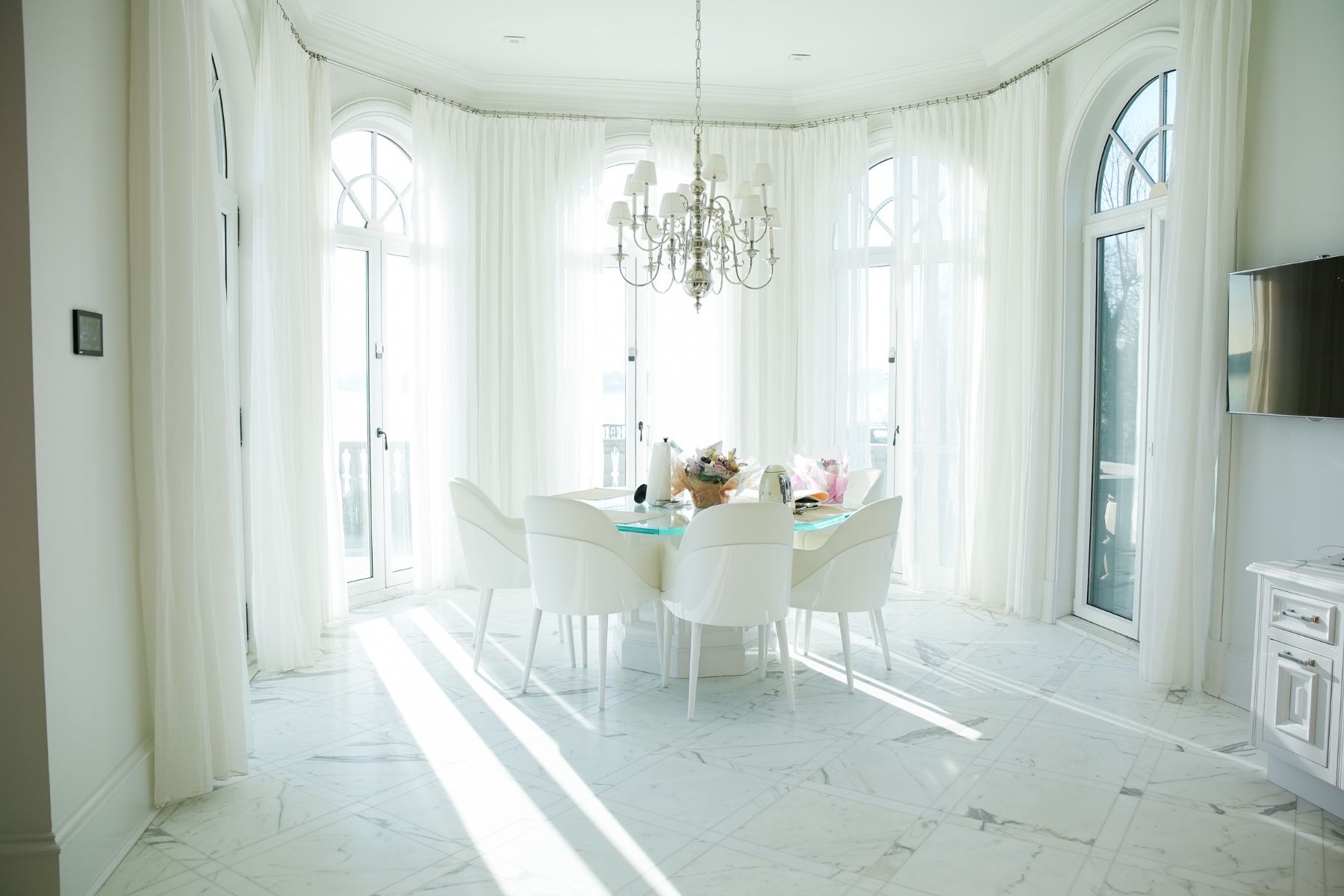
Direct sunlight can create noticeable temperature differences across polished marble floors and make changes in the finish more visible throughout the day.
Outdoor Kitchens, Patios, and Fireplace Surrounds
Outdoor natural stone faces a wider range of temperature conditions than interior surfaces. Summer sun, grilling equipment, fire features, rain, humidity, and cooler nighttime temperatures can all affect an exterior installation.
Outdoor Kitchens
Stone countertops installed around grills and pizza ovens may be exposed to high temperatures for extended periods. Proper installation should account for heat clearance, ventilation, expansion, and the performance of adjoining materials.
Even when the stone is suitable for outdoor use, cooking grease, smoke, acidic marinades, and weather exposure may create staining or surface buildup that is mistaken for heat damage.
Fireplace Surrounds
Marble and limestone are frequently used around luxury fireplaces because of their architectural beauty. Darkening near the firebox may be caused by soot, smoke residue, heat exposure, or a combination of all three.
Household cleaning products should not be used aggressively in these areas. Abrasive pads and acidic cleaners can damage the finish while failing to address the source of the discoloration.
Pool Areas and Patios
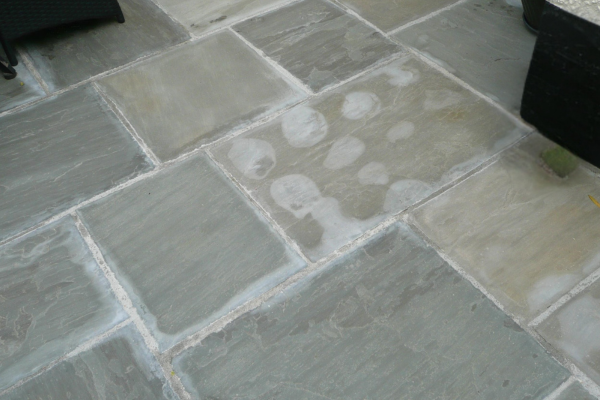
Outdoor stone can become extremely hot in direct sunlight. Although this does not automatically mean the material is being damaged, temperature cycling may contribute to movement within grout joints, seams, setting materials, or previously repaired sections.
Routine inspections are especially important for waterfront and coastal properties where salt, moisture, UV exposure, and heat work together throughout the year.
Marble vs. Granite vs. Quartzite: Which Handles Heat Best?
Different natural stones respond to heat in different ways. The installation, finish, thickness, sealer, and condition of the surface are just as important as the stone type itself.
| Stone Type | General Heat Resistance | Primary Concern | Recommended Protection |
|---|---|---|---|
| Marble | Good | Sealer damage, discoloration, and thermal stress | Use trivets beneath hot cookware and appliances |
| Granite | Excellent | Damage to sealers, resins, seams, or repaired areas | Avoid placing extremely hot items directly on the surface |
| Quartzite | Excellent | Sealer deterioration and resin discoloration | Use heat-resistant pads for prolonged exposure |
| Limestone | Moderate | Surface wear, staining, and sensitivity around fillers | Protect from direct and concentrated heat |
| Travertine | Moderate | Filled areas and sealers may react differently than the stone | Use protective barriers and inspect filled sections |
| Onyx | More Sensitive | Resin content, translucency, and potential discoloration | Avoid direct heat exposure whenever possible |
No premium surface should be treated as completely immune to heat. Consistent protection helps preserve not only the stone, but also the finish, sealer, seams, repairs, and surrounding installation.
How to Tell If Heat Has Affected Your Marble
Heat damage is sometimes confused with etching, staining, residue, or ordinary wear. A professional evaluation can determine whether the issue is within the stone, the sealer, or the surface finish.
Signs that may deserve closer attention include:
- A yellow, brown, or darkened area beneath an appliance
- A cloudy ring where hot cookware was placed
- A patch that appears duller than the surrounding polished marble
- A rough or uneven texture that remains after cleaning
- Discoloration around a repaired crack, seam, or resin-filled area
- A new hairline crack near a cooktop, fireplace, or heated appliance
- A surface that begins absorbing water more quickly than nearby areas
Avoid experimenting with vinegar, bleach, abrasive powders, household degreasers, or internet-based DIY treatments. These products may create additional etching, discoloration, or finish damage that makes professional correction more difficult.
Can Heat Damage on Marble Be Repaired?
Many heat-related surface issues can be improved or corrected without replacing the marble. The appropriate treatment depends on what has actually been affected.
Professional restoration may include:
- Removing damaged or discolored surface treatments
- Honing marble to reduce dull spots and finish inconsistencies
- Polishing the surface to restore clarity and reflection
- Cleaning soot, grease, or residue from fireplace and cooking areas
- Repairing or stabilizing minor cracks when appropriate
- Correcting visible differences around repaired or resin-filled areas
- Applying a suitable penetrating sealer after restoration
Not every mark can be removed with polishing alone. Deep discoloration, structural cracks, damaged adhesives, or altered resin may require a more specialized repair strategy.
An experienced natural stone professional will diagnose the material and source of the problem before recommending treatment. This prevents unnecessary grinding, aggressive chemical use, or repairs that do not address the underlying cause.
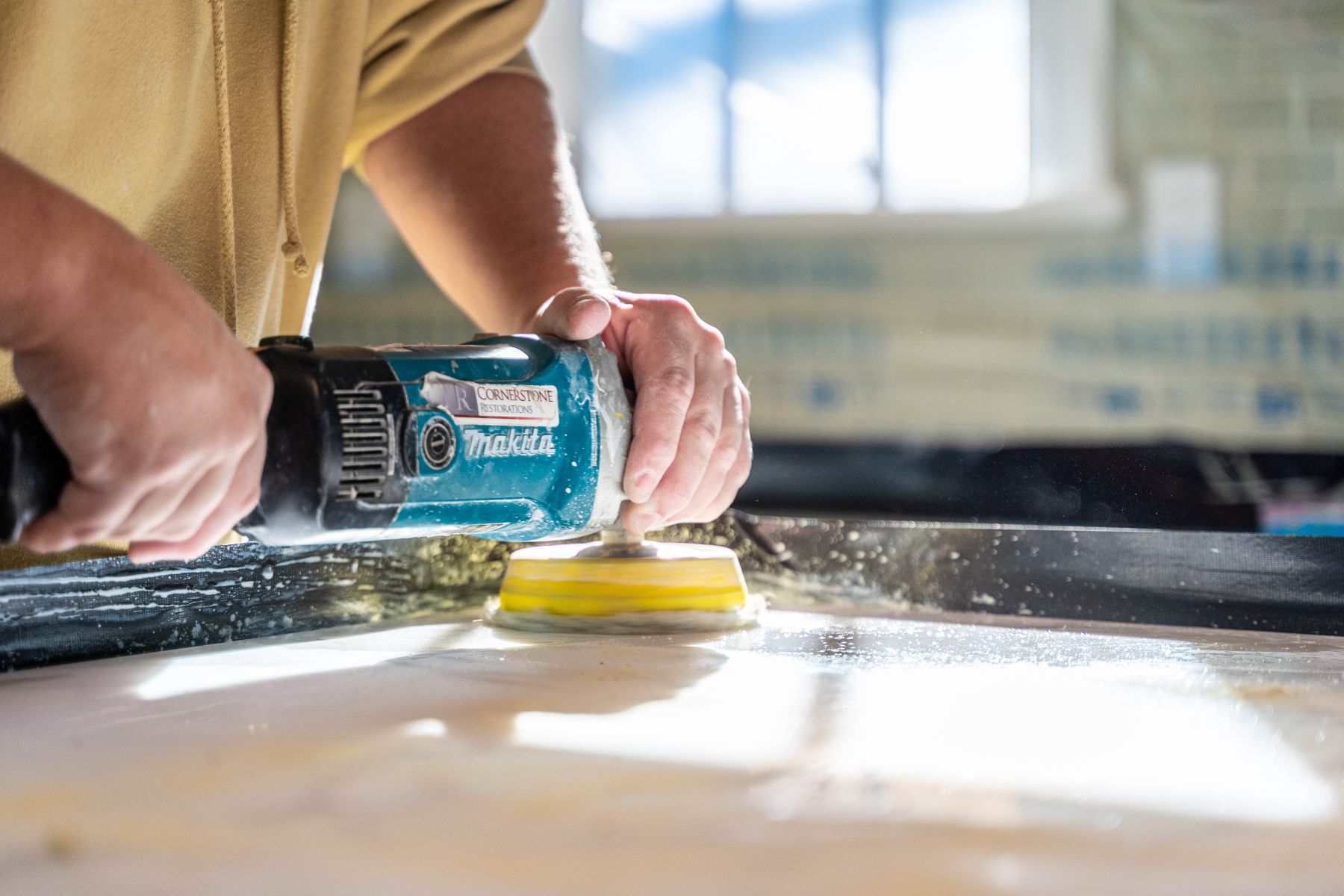
Professional honing and polishing can often improve dullness, surface discoloration, and finish inconsistencies without replacing the original stone.
How to Protect Marble From Heat
Preventing heat-related wear is easier and more cost effective than correcting damage after it appears.
A few simple habits can protect marble countertops, bathroom vanities, fireplace surrounds, and outdoor stone installations:
- Use trivets beneath pans, baking sheets, and heated serving dishes.
- Place heat-resistant pads beneath slow cookers, air fryers, and toaster ovens.
- Avoid placing curling irons directly on marble bathroom vanities.
- Allow hot cookware to cool before placing it on natural stone.
- Keep portable warming trays and burners elevated from the surface.
- Inspect areas around cooktops, grills, and fireplaces for developing cracks or discoloration.
- Ask a stone specialist whether the current sealer is appropriate for the surface and environment.
- Schedule periodic maintenance before the finish becomes heavily worn or uneven.
These measures are particularly important in kitchens used for frequent entertaining, catered events, seasonal gatherings, or professional cooking.
Why Routine Stone Maintenance Matters
Marble and other natural stones change gradually through use. Heat exposure, acidic spills, foot traffic, sunlight, moisture, and cleaning products can all affect the finish over time.
A structured natural stone maintenance program allows professionals to identify small issues before they require extensive restoration. It also helps luxury homeowners and property managers maintain a consistent finish throughout large kitchens, bathrooms, foyers, living spaces, and outdoor entertaining areas.
Depending on the property, a maintenance plan may include periodic inspections, professional cleaning, honing, polishing, minor repairs, and sealer evaluations.
This preventative approach is especially valuable for luxury estates, high-use residences, hospitality spaces, and properties that are occupied seasonally.
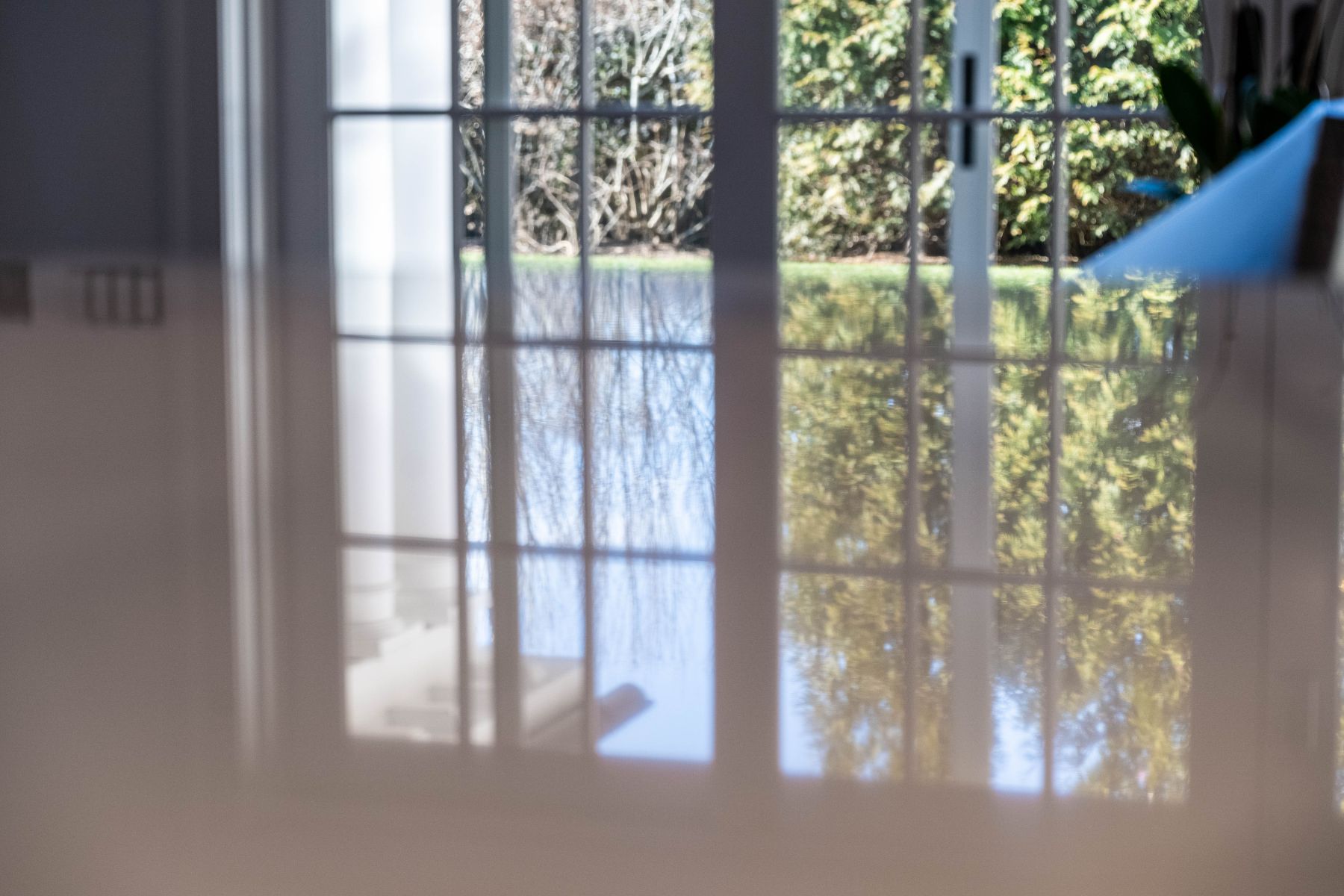
A professionally maintained stone finish reflects light with greater clarity and helps preserve the original character of the surface.
Frequently Asked Questions
Can a hot pan crack marble?
A hot pan does not usually crack a properly installed marble slab, but concentrated heat may create thermal stress, especially near existing fissures, seams, unsupported areas, sink cutouts, or previous repairs. Using a trivet is always recommended.
Can you put hot dishes on marble countertops?
Warm serving dishes are generally less concerning than cookware removed directly from an oven or cooktop. For consistent protection, place a trivet or heat-resistant pad beneath any hot dish.
Does heat stain marble?
Heat may cause discoloration in certain sealers, resins, adhesives, or repaired areas. Grease and cooking residue can also darken when heated, creating a mark that may be mistaken for a stain within the stone.
Can a coffee maker damage marble?
A coffee maker may expose one area of the countertop to repeated heat, moisture, and coffee residue. Over time, this combination may affect the sealer or create staining. A suitable protective mat can help reduce direct exposure.
Is granite more heat resistant than marble?
Granite generally offers excellent heat resistance, but the sealer, seams, resin repairs, and surrounding installation can still be affected by extreme temperatures. Hot cookware should not be placed directly on any premium natural stone surface.
Can heat damage on marble be polished out?
Some dullness and finish changes can be corrected through professional honing and polishing. Discoloration within resin, adhesives, or deeper areas of the stone may require additional treatment.
Should marble countertops be sealed after heat damage?
The surface should first be professionally evaluated and restored if necessary. Once the finish is clean and stable, a suitable penetrating sealer may be applied based on the marble type, location, and level of use.
How often should luxury marble surfaces be professionally maintained?
There is no universal maintenance schedule. The appropriate frequency depends on the type of marble, finish, household activity, cleaning routine, environment, and exposure to food, moisture, heat, or foot traffic.
Protect Your Marble Before Small Changes Become Permanent
Marble is durable enough for many of the most impressive residential and commercial spaces, but its beauty depends on thoughtful care. Direct heat may not always create immediate damage, yet repeated exposure can gradually affect the sealer, polished finish, repaired areas, and surrounding installation.
Using trivets, protecting surfaces beneath heated appliances, and addressing discoloration or dullness early can help preserve the original character of the stone.
If your marble countertop, fireplace surround, bathroom vanity, or outdoor stone surface has developed a cloudy area, dark mark, uneven finish, or visible crack, a professional evaluation can determine whether the issue was caused by heat, etching, staining, residue, or normal wear.
Cornerstone Restoration specializes in the restoration and ongoing maintenance of marble, limestone, travertine, quartzite, granite, onyx, and other premium natural stone surfaces throughout New York and South Florida.
Schedule a professional stone assessment to protect your natural stone surfaces before minor wear becomes a more extensive restoration project.

%20(600%20x%20300%20px).png)

.svg)

.svg)