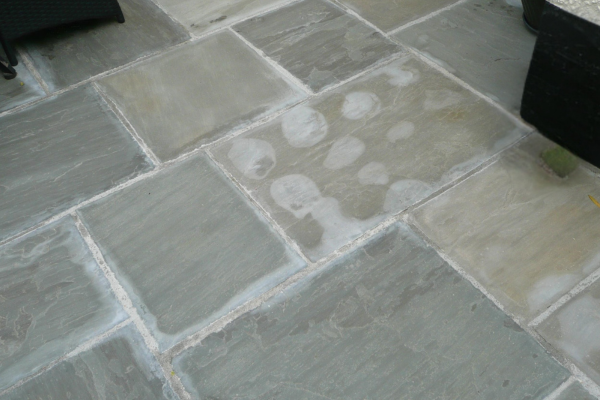
You clean your natural stone, only to find a chalky white film or powder right back where it was a few days or weeks later. At first glance, it looks like dust, leftover cleaner residue, or a strange stain. But more often than not, that persistent white buildup is efflorescence.
Efflorescence is commonly associated with moisture and can appear on everything from stone patios and pool decks to bathroom floors and showers. While wiping it away may temporarily improve the appearance of the surface, cleaning alone does not always stop it from forming again.
Understanding why efflorescence develops is an important first step toward protecting your natural stone and choosing the appropriate treatment.
What Is Efflorescence?
Efflorescence is a crystalline, powdery white deposit that can form on porous materials including natural stone, concrete, brick, pavers, masonry, and grout.
It develops when moisture moves through or behind these materials and dissolves soluble salts along the way. As the moisture reaches the surface and evaporates, the water disappears while the salts remain behind as a visible white residue.
Because a natural stone installation is made up of more than the stone itself, those salts may originate from surrounding materials such as mortar, setting beds, grout, adhesives, or the substrate beneath the stone.
Why Does Efflorescence Keep Appearing?
If efflorescence is present, it typically indicates that moisture is moving through the stone or surrounding installation.
Common contributing factors include:
- Trapped moisture underneath the stone
- Poor drainage or standing water
- Water intrusion or leaks
- High humidity
- Regular exposure to rain, irrigation, or pool water
- Soluble salts within mortar, grout, setting materials, or substrates
The presence of efflorescence does not automatically mean the natural stone itself is damaged or structurally failing. Instead, the white residue may act as a visible indication that moisture is moving through the larger installation.
If the powder repeatedly returns after cleaning, identifying the source of that moisture becomes especially important.
Where Is Efflorescence Most Common?
Efflorescence requires three basic conditions: moisture, soluble salts, and evaporation. Because of this, it frequently appears in areas that are regularly exposed to water or humidity.
- Patios and terraces
- Pool decks and pool surrounds
- Exterior stone installations
- Entryways
- Showers and bathroom floors
- Outdoor kitchens
- Fountains and water features
- Retaining walls and other exterior masonry surfaces
Porous natural stones such as marble, limestone, and travertine are commonly used in many of these environments, making proper identification particularly important before attempting any treatment.
Is It Efflorescence or a Stain?
Not every white, hazy, or chalky mark on natural stone is efflorescence.
Similar-looking conditions may include:
- Hard-water mineral deposits
- Cleaning-product residue
- Grout haze
- Etching
- Surface wear or finish damage
- Other forms of staining or mineral buildup
These conditions can look similar to an untrained eye but may require completely different treatments.
For example, a dull or cloudy area on polished marble might appear to be surface buildup when it is actually an etch mark. Scrubbing the area with stronger cleaners will not restore the polish and may make the damage more noticeable.
Correctly identifying the condition before treating the stone helps prevent unnecessary damage and ineffective cleaning.
Can You Clean Efflorescence Off Yourself?
The visible salt deposits associated with efflorescence can often be removed from the surface. However, cleaning is only one part of addressing the problem.
If moisture continues moving through the installation, the white residue may simply return. This is why repeatedly cleaning the same area without identifying the underlying cause can become frustrating.
Homeowners should also be careful about the products they use. Heavy-duty acidic cleaners, harsh chemicals, abrasive products, and generic DIY remedies can create additional problems on natural stone.
Calcite-based stones such as marble, limestone, and travertine are particularly sensitive to acids. A cleaner intended for ceramic tile, grout, or another hard surface may permanently etch, dull, or alter the finish of the stone.
How to Properly Address Efflorescence
There is no single treatment that works for every case of efflorescence. The appropriate approach depends on the stone, finish, installation, severity of the deposits, and source of the moisture.
A professional evaluation will typically consider several factors:
- Identify the residue: Determine whether the white material is actually efflorescence or another condition such as etching, mineral buildup, or staining.
- Find the moisture source: Evaluate whether water is entering through drainage problems, leaks, humidity, exterior exposure, or another condition.
- Identify the stone and finish: Different natural stones and finishes require different cleaning and restoration methods.
- Remove deposits appropriately: Use methods and products suitable for the specific stone rather than relying on aggressive general-purpose cleaners.
- Address contributing conditions: Correct drainage, waterproofing, or moisture issues where possible to reduce the likelihood of recurrence.
Removing the visible powder may improve the appearance of the stone, but solving the underlying problem often requires looking beyond the surface.
Will Sealing Natural Stone Stop Efflorescence?
Sealers can play an important role in protecting certain natural stone surfaces, but a sealer is not a universal cure for efflorescence.
If moisture and salts are already moving through the installation, applying a sealer without addressing the source of the moisture may not solve the problem. In some situations, the treatment may fail prematurely or interfere with the stone's ability to release moisture.
Whether a surface should be sealed, which type of sealer should be used, and when it should be applied depend on the stone, finish, location, exposure, and overall installation.
A professional stone assessment can help determine whether sealing should be part of the long-term maintenance strategy.
When Should You Call a Natural Stone Restoration Professional?
It may be time for a professional evaluation if:
- The white residue keeps returning after cleaning
- A large or highly visible area is affected
- The stone has become dull, cloudy, uneven, or discolored
- You are unsure whether the issue is efflorescence, etching, staining, or mineral buildup
- The affected material is marble, limestone, travertine, or another sensitive natural stone
- There are signs of ongoing moisture, drainage problems, or water intrusion
Natural stone can remain beautiful for decades when properly maintained, but treating the wrong condition with the wrong product can create damage that is more difficult and costly to correct.
Protect Your Natural Stone With the Right Treatment
Persistent white residue on natural stone should not be treated with guesswork. Determining whether the surface is affected by efflorescence, mineral buildup, staining, etching, or another condition is the first step toward choosing an appropriate treatment.
At Cornerstone Restoration, we specialize in the professional care, restoration, and ongoing maintenance of natural stone surfaces. Our team evaluates the stone, finish, environment, and underlying condition before recommending a treatment designed for the specific surface.
Whether the issue is affecting marble, limestone, travertine, or another premium natural stone, addressing the cause early can help prevent recurring problems and unnecessary damage.
Seeing persistent white residue on your natural stone? Schedule a professional stone evaluation with Cornerstone Restoration before attempting another cleaning treatment.


%20(600%20x%20300%20px).png)

.svg)

.svg)